In a world where trade wars and political instability are becoming the new norm, Indonesia emerges as a "safe haven" for capital and business. Why the largest investors are betting on this country and what opportunities the Southeast Asian market opens up — read in our article.
Indonesia — the last island of stability: where money is fleeing from the West and why investors are rushing here right now?
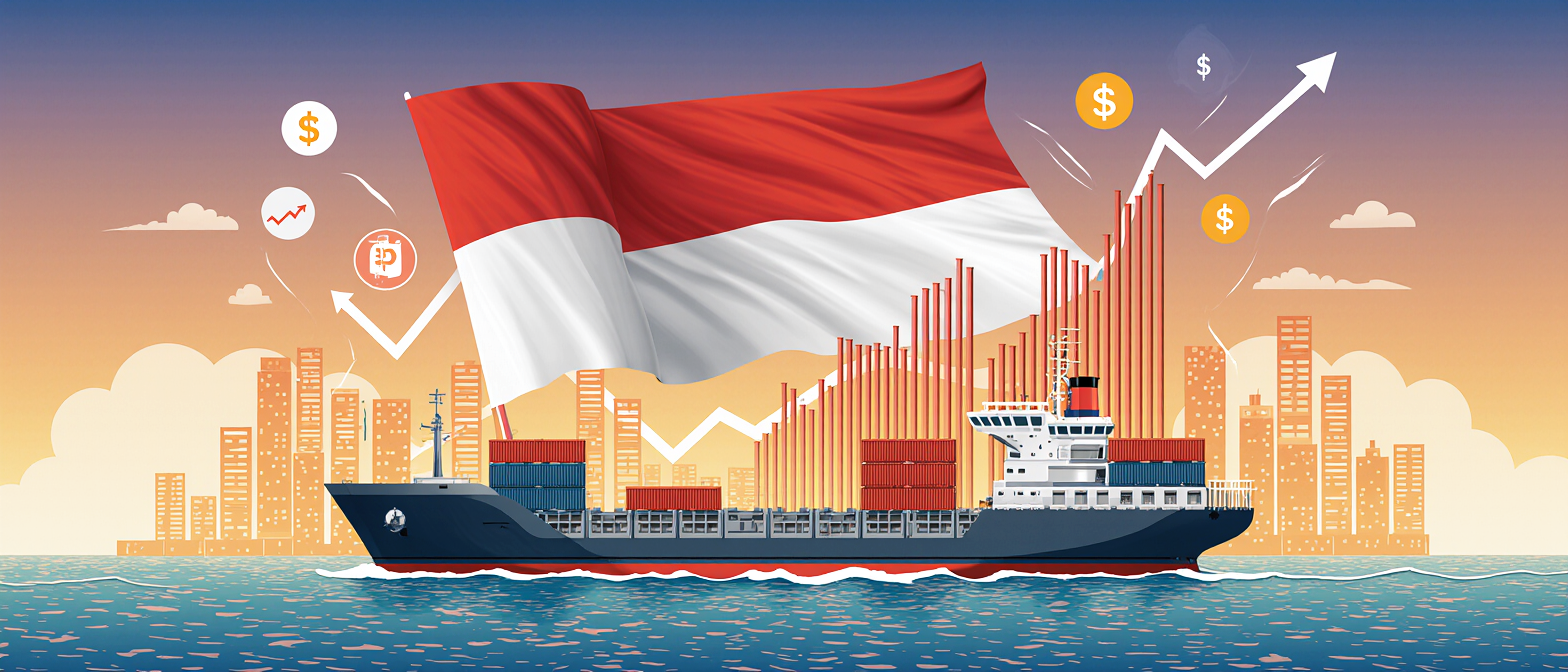
Trade wars, geopolitics, and the search for "new shores": why Indonesia is becoming the new "safe haven" for global investments.
Introduction:
The new landscape of global investments
In an era of trade wars, sanctions, and financial market instability, more capital is leaving established centers, creating new growth points. Indonesia — the largest archipelago and a dynamically developing hub in Southeast Asia — is becoming one of the most attractive "havens" for global investments.
Restructuring the world economy: a Bloomberg perspective
- $1.3 trillion withdrawn from China during 2022–2024 (Institute of International Finance).
- In 2023, the global volume of foreign direct investment in emerging markets exceeded $890 billion (UNCTAD).
- Indonesia attracted $47 billion in foreign investments in 2023 alone (BKPM).
Indonesia by the numbers: where investors are looking
- Stable GDP growth — 5% annually for over ten years (Asian Development Bank), GDP in 2023 — $1.4 trillion.
- Population of 282 million — fourth largest in the world; median age — 29.7 years (World Bank).
- Leader in nickel, tin, coal, and gas — key to the new global energy and battery sectors (Bloomberg, USGS).
- ESG-class projects and green agenda — growth in the "green" bonds and eco-projects sector (Climate Bonds Initiative).
Who and why it is profitable to invest in Indonesia?
- Portfolio diversification: Indonesia has low correlation with Western markets, reducing volatility.
- Entry into the fast-growing ASEAN region: 650 million consumers, synergy within the bloc (ASEAN Statistics).
- Access to new infrastructure: megaprojects, new capital city, logistics and transport hubs.
For manufacturers and brands
- Localization of production: major companies are already relocating supply chains to Indonesia (Tesla, CATL, Foxconn).
- Growth of domestic demand: e-commerce volume will exceed $150 billion by 2026 (Google/Temasek).
- Favorable regulations, export incentives, and tax breaks for new manufacturing.
For the real estate market
- Expansion of the middle class: demand for housing, commercial, and resort real estate.
- Government support programs for developers and stable macroeconomics.
- Comprehensive consulting for market entry: market potential assessment, due diligence, location selection, legal setup, partner search.
- Investment development: projects with transparent structure and maximum investor protection.
- Turnkey support: legal expertise, deal support, administrative and tax assistance.
- Own experience launching international brands: Husky (top-1 in Russia, expansion in Indonesia), projects in real estate, digital economy.
Conclusion
Learn More
Market Potential Assessment Plan.
This plan will help determine whether launching a product in the Indonesian market is worthwhile, what risks and opportunities exist, and which strategies are best to use.
This plan will help determine whether launching a product in the Indonesian market is worthwhile, what risks and opportunities exist, and which strategies are best to use.
CONTACT INFORMATION