How to launch a coffee brand simultaneously in Russia and Indonesia
For whom: retailers, distributors, D2C brands, HoReCa (Russia/EAEU).
What matters: Direct Trade provides product margin and uniqueness, the classic “exchange” model delivers volume and predictability. We launch turnkey projects in Indonesia and support export.
Material prepared by a representative of AndiMax, member of the Indonesian Expansion Alliance (INEXA).
How to launch a coffee brand simultaneously in Russia and Indonesia
Introduction: types of coffee brand models
- FMCG/commodity brands. Mass blends and instant coffee, focus on volume and price (segment example: global players like Nestlé, Jacobs, Lavazza). Pros — scale and stability; cons — average profile and weak storytelling.
- Specialty roasters. Single origin, farm story, traceability; often operate under direct contracts. Pros — price premium and loyalty; cons — higher operational complexity.
- Private Label retail. Own brands of chains and e-commerce; important to control cost price, compliance, and speed to market. Here Direct Trade helps to stand out and maintain margin.
Figures are guidelines. Precise calculations provided for your lot/Incoterms/volumes/packaging.
- Direct purchase: contract with farmer/cooperative; prepayment 20–30% + balance on shipment; price fixed for the season.
- Exclusivity: securing the lot/farm for your market (Russia/EAEU or Indonesia).
- Roasting: own/rented or contract with local roaster (specifications and QC control).
- Sales: own brand (marketplaces, retail, coffee shops) and/or wholesale to roasters/HoReCa.
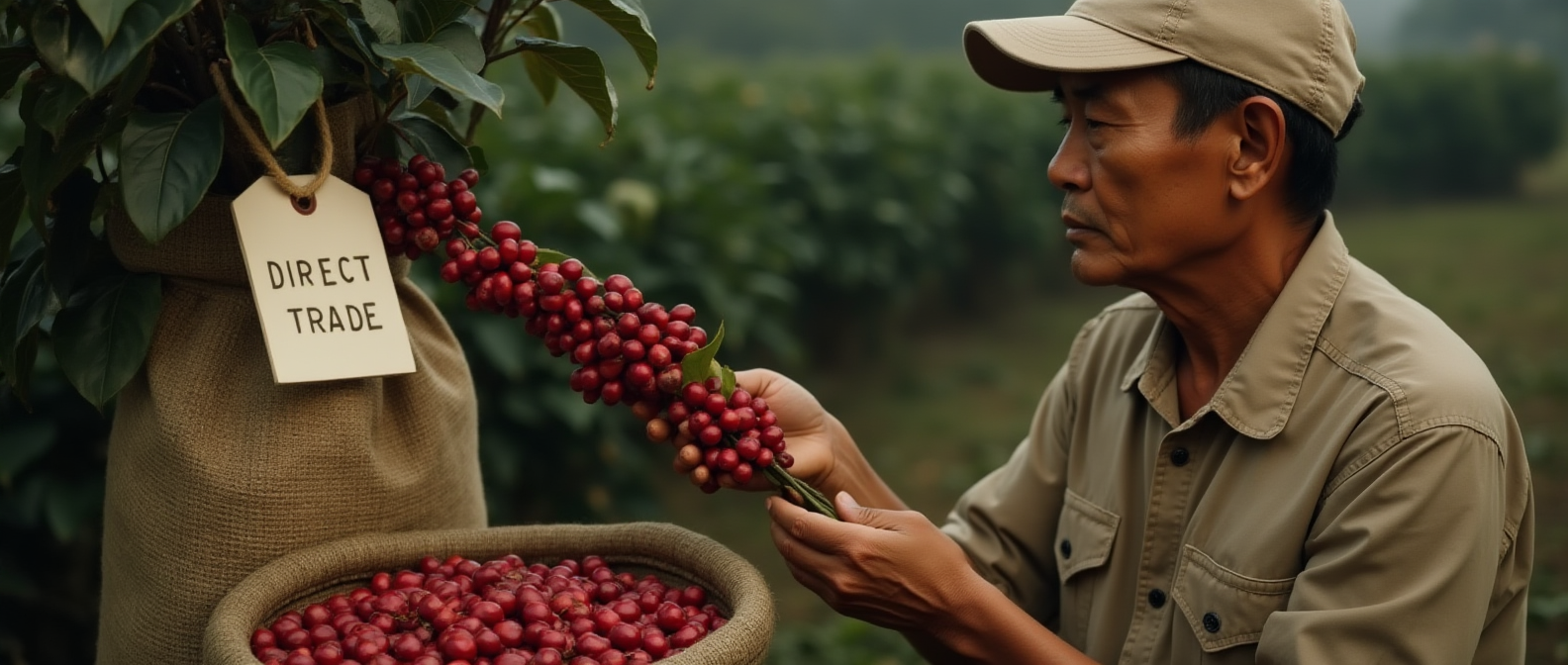
- Marketing: origin story, photos/videos from plantation, sustainable practices, full traceability.
- Green coffee export (Direct Trade lots) to Russia/EAEU markets.
- Roasted under the same brand — sales in Indonesia: profile/labels synchronized. For local sales we arrange BPOM MD + Halal (BPJPH) — allow up to 6 months; after registration e-commerce pilot possible within 2–4 weeks.
- Export pilot: 6–10 weeks (IP/samples → contract → production/QC → shipment).
- Indonesian retail: + registrations BPOM/Halal up to 6 months.
- Brand and IP (DJKI). 2) Suppliers (CPPOB, MOQ, cuppings). 3) Contracts/specifications. 4) Packaging/languages/barcodes (Halal/SNI if needed). 5) Compliance for destination country. 6) Export documents (PEB, e‑SKA, health/halal/phytosanitary if needed). 7) Logistics FOB/CIF/DDP.
Learn More
Market Potential Assessment Plan.
This plan will help determine whether to launch the product in the Indonesian market, identify risks and opportunities, and select the best strategies.
This plan will help determine whether to launch the product in the Indonesian market, identify risks and opportunities, and select the best strategies.
CONTACT INFORMATION